
Rotator Cuff Disease & Rotator Cuff Tears
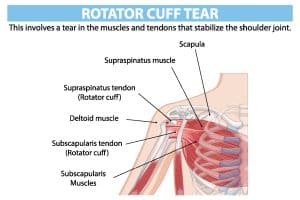 Our orthopedic surgeons are highly skilled at diagnosing and treating patients with rotator cuff disease. Rotator cuff disease is a common condition that occurs when the tendons of the rotator cuff muscles become inflamed or torn. These muscles help to stabilize the shoulder joint and allow for movement. When they are damaged, it can cause pain, weakness, and limited range of motion.
Common Causes for Rotator Cuff Tears
- Overuse: Repetitive motions, such as those involved in sports or certain occupations, can put stress on the rotator cuff tendons.
- Age-related degeneration: As we get older, the tendons of the rotator cuff can naturally wear down and become more susceptible to injury.
- Trauma: A sudden injury, such as a fall or a direct blow to the shoulder, can tear the rotator cuff tendons.
- Other conditions: Conditions such as arthritis, diabetes, and poor posture can also contribute to rotator cuff disease.
Symptoms:
- Shoulder pain, particularly at night or when resting
- Weakness in the shoulder
- Limited range of motion
- Difficulty with activities such as reaching overhead or behind your back
- A clicking or popping sensation in the shoulder
To learn more about rotator cuff tears, click here.
Rotator Cuff Disease Treatment Options
If you are experiencing symptoms of rotator cuff disease, it is important to see a doctor for diagnosis and treatment. Early intervention can help to prevent the condition from worsening.
Your orthopedic specialist will recommend a treatment plan for your rotator cuff issues that fits your lifestyle and occupation.
Here are some of the common recommendations:
- Rest: Avoiding activities that aggravate the shoulder can help it to heal.
- Physical therapy: Exercises can help to strengthen the rotator cuff muscles and improve range of motion.
- Nonsteroidal anti-inflammatory drugs (NSAIDs): Over-the-counter medications such as ibuprofen or naproxen can help to reduce pain and inflammation.
- Corticosteroid injections: In some cases, injections of corticosteroids can help to reduce inflammation and pain.
- Platelet Rich Plasma Injections (PRP): PRP injections are a non-surgical regenerative medicine procedure that can promote quick, effective, and sustained relief from discomfort and pain.
- Surgery: In severe cases of rotator cuff tears, shoulder surgery may be necessary to repair the damaged tendons. This can include minimally invasive shoulder surgery (shoulder arthroscopy), BIOBRACE® the first and only FDA-approved bioinductive implant, shoulder joint replacement (shoulder arthroplasty surgery), and reverse shoulder replacement surgery.